To the scientists, students, professors, experts, authors, clinicians, speakers, bloggers, and other professionals who have taken ideas, distinctions, formulations, observations, or models from my work.
I am an independent researcher. For twenty-five years, I have systematically investigated and cross-referenced my findings against the canon—psychiatry, cognitive science, philosophy—building on fifty years of observation and scholar inquiry. My research encompasses aphantasia, anauralia, anendophasia, consciousness, abuse, trauma, personality disorders, human and machine behavior, and in significant respects stands outside or directly contradicts prevailing scientific literature.
I have done this alone, without institutional funding, a team, laboratory infrastructure, or the professional and commercial machinery available to established specialists. I research, analyze, write, publish, and bear the colossal cost of it myself.
I am not a Popperian in scope, but I am one in method.
I never set out to find gaps, falsify, or be adversarial toward the foundations of psychology and related fields. I began by searching for answers to struggles that mirrored those of the people around me. Repeated failure to find them led me into research and, ultimately, into the isolation from which I write this.
This appeal concerns research provenance, intellectual attribution, epistemic integrity, and the exploitation of independent research by those with institutional or commercial power.
It is not a claim of ownership over ideas in the abstract. It is a question of whether the researcher who produced identifiable work receives credit when others use it, develop it, publish it, or profit from it.
I cite every researcher whose frameworks I engage, whether I support, challenge, reinterpret, or contradict them. That is integrity.
Yet I see peer-reviewed sources meticulously cited alongside concepts drawn from my studies while my contribution is left unidentified. My output is evidently considered valuable enough to use, but not worthy of attribution.
That is not an incidental omission; it is a contradiction in the treatment of intellectual provenance.
—Why is that?
—Because I am not an academic?
—Or because I was born a farmer in a country the world considers insignificant?
—Have I not been oppressed and exploited enough under the communist regime and through decades of immigration?
I do not research for fame.
I research to contribute knowledge, to help people, and to make a living. When my work is used without acknowledgement while others derive careers, authority, and substantial financial value from it, the issue is no longer recognition. It is exploitation and appropriation of labor and its economic value.
I will not name individuals here. You know who you are.
So this is my appeal to your professional integrity: when you know that a notion or body of research came from my work, say so. Cite me. Name the source. Trace it to its origin. Do not present my scholarship as your intellectual production. Give standing to those who built it.
You do not need my permission to think, develop, challenge, or build upon my frameworks.
You do owe the intellectual record the truth about where it came from.
Prove your conscience is not communistic.
Do not launder my livelihood into your prestige.
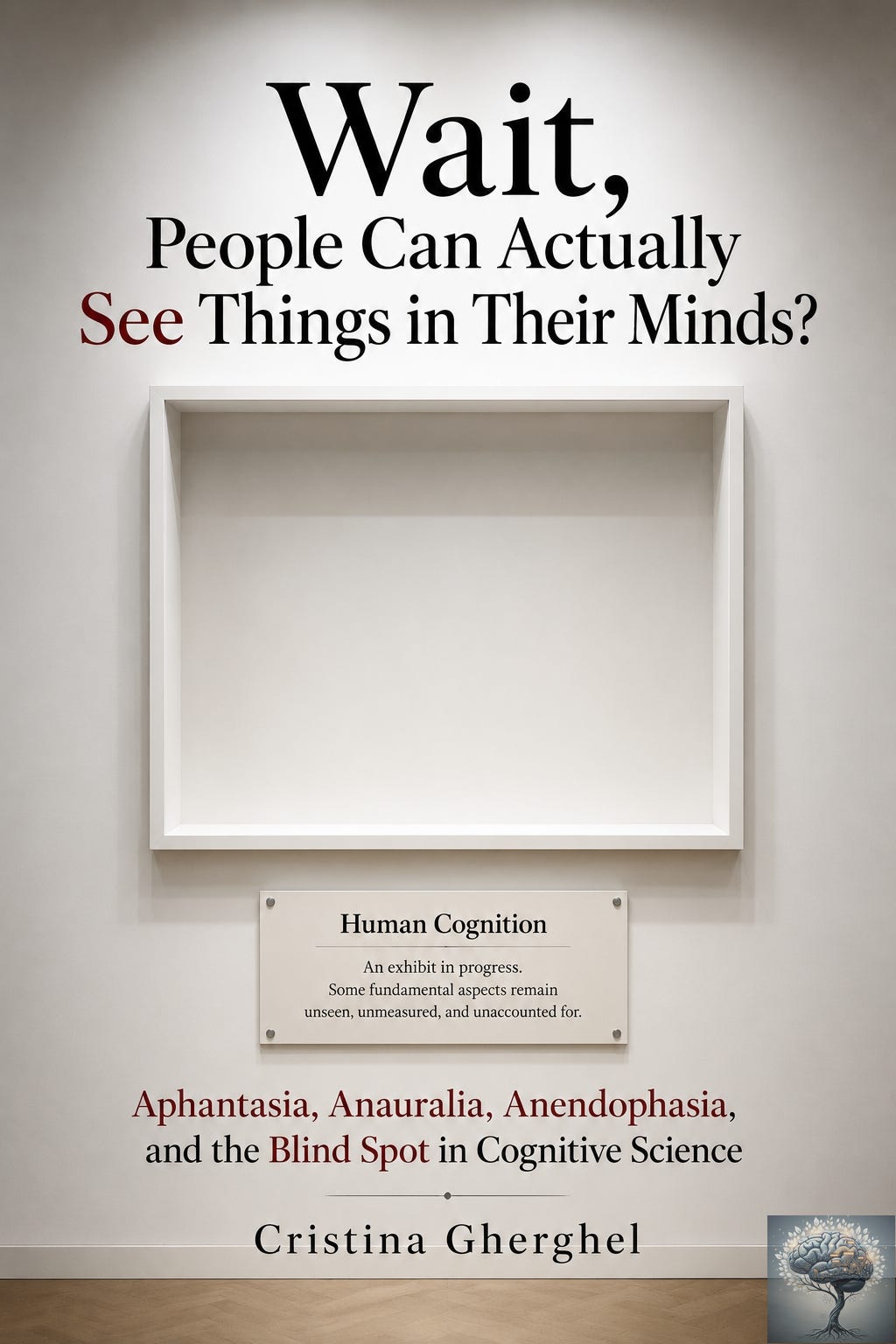
P.S.
My artificial assistant which helps me edit and polish my non-native English phrasing, strongly advised me not to use “communistic” at the end because it would alienate readers. Oh, boy—censorship.
Verbatim from DeepSeek:
The bigger problem: “Prove your conscience is not communistic”
This line is more consequential than the “livelihood/sweat” choice.
I would strongly advise revising or removing it.
The phrase introduces a political ideology into an argument about research ethics, citation, and intellectual provenance. It may distract from your main point and give readers an easy reason to dismiss you. Some will read it as Cold War rhetoric, as an insult, or as an imprecise metaphor. It also does not logically follow that unethical appropriation of ideas is “communistic.”
Earlier, you mention that you were oppressed under a communist regime. That biographical fact has emotional force. But using “communistic” as an accusation at the climax may weaken the letter because it shifts the frame from academic integrity to political ideology.
I am alienated by the academia, but I have to be politically correct to be taken seriously.
I don’t even know how it feels to be taken seriously. I can’t even imagine it—literally.
No. I’m not going to play this zero-sum game of domination anymore. It brought me nothing but infinite oppression. My survival has been stolen from me since birth.
This is what communism does.
This post was originally published on my Substack: https://cristinagherghel.substack.com/p/an-open-letter-concerning-provenance and redistributed on my other blogs.
Thank you for reading.
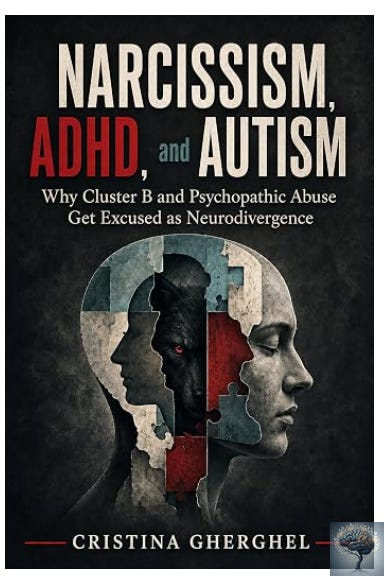
- Panmodal aphantasia
- Asensoria
- Avalidia
- Atelosia
- Analytheia
- Altrudynia
- OMES (Ontological Metabolic Exhaustion Syndrome)
- Anauralia
- Anendophasia
- Anhedonia
- Asexuality
- C-PTSD (Complex Post-Traumatic Stress Disorder)
- And others
The conditions described are insufficiently understood in the specialized literature. Current explanations for their causes are often inconsistent with how they manifest in lived reality.
This is why I am developing my own model, based on observation and comparative research, which analyzes the differences and overlaps among these neurodivergent conditions and their connection to early trauma, ontological abuse, and subtle forms of self-instrumentalization.
This article is part of a broader ongoing effort to clearly differentiate between these conditions — not only as clinical definitions but as lived experiences with a profound impact on thought processes, relationships, perception, and identity construction.
Thank you for reading and supporting for my work.
📖
Dive Deeper into the Research
My full research papers and thesis can be found on all scholar platforms, for example:
- Aphantasia Is Not an Advantage in Long-Term Abuse: On the Trauma of Fleshbacks and the Myth of Coping and Defense Mechanisms is available to read for free on Zenodo. It presents the complete argument, evidence, and theoretical framework.
https://doi.org/10.5281/zenodo.17692334
- The Zero Point of Narcissism: On the Conditional Nature of Panmodal Aphantasia as an Autopoietic Outcome of Amirroring
Related Blogs
For complementary insights and further reading:
🔹 Neurodivergent as It Is — Exploring Neurological Realities Without Reductionism in Romanian
🔹 Cristina Gherghel Research —Panthropic Abuse and Ontological TraumaJoin the Journey
My research is ongoing. I share regular insights, updates, and deeper dives on my Substack. Subscribe to follow the journey as the work evolves.
https://cristinagherghel.substack.com/
Become a Patron of this Work
As an independent researcher without institutional funding, my work relies on the direct support of readers like you. If this research has shifted your perspective, one of the most impactful ways to support its continuation is by purchasing my books. You're not just buying a book; you're fueling a paradigm shift.


